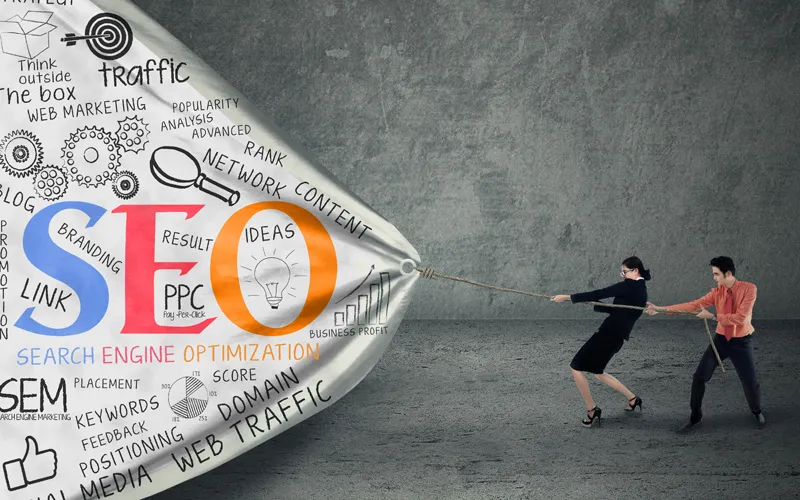
Digital visibility is the probability of being found, understood and chosen, and in 2026 it rests on four levers: content, search, advertising and conversion. Italy's advertising market was worth 11.8 billion euro in 2025, with an estimate of 12.7 billion for 2026, and the digital share is heading for 7 billion. Generative artificial intelligence has shifted the centre of gravity from ranking position to citation.
The Italian market in 2026
Italy's advertising market closed 2025 at 11.8 billion euro, up 5%, and estimates for 2026 point to 12.7 billion, about 900 million more. The digital component is the most dynamic: internet advertising moves from 6.2 billion in 2025 to a target of 7 billion in 2026, a 12% increase.
One figure explains the concentration of the sector: large international operators collect 83% of online spending. Digital video is worth 2.9 billion (+16%) and accounts for 41% of the digital market, while paid search weighs 24% and grew 9%. For a business the consequence is direct: visibility is built on channels owned by a few players, and the difference comes from the quality of content, the relevance of search and the ability to convert.
Search is changing: from position to citation
Google has made generative search structural. AI Overviews has passed 2.5 billion monthly users and AI Mode one billion, and synthetic answers appear across a large share of searches. Pew Research Center analysed 68,879 Google searches by US users between March and April 2025: 58% encountered at least one AI summary, and clicks on a traditional result fall to 8% when the summary is present, against 15% when it is absent. Links cited in the summary collect 1% of clicks, and the session ends on the search page in 26% of cases, against 16%.
These figures describe a change of objective. Ranking position matters less than the ability to be cited as a source and to meet an already formed demand. Google continues to present foundational SEO practices as the basis of visibility in AI features too, and asks for original, hard-to-replicate content. Since June 2026 Search Console offers dedicated reports on performance in AI features and a control for those who want to opt out, noting that the choice does not affect ranking outside those features.
Content: the base of visibility
Content remains the first building block. Google's guidance asks for unique material written for people, with demonstrable expertise: a replicable text, produced to fill a page, loses value in an index where AI summaries already answer simple questions.
Useful content produces three measurable effects: it attracts qualified traffic, it lasts over time and it builds the credibility of the business. Trust in marketing strategies is built exactly here, with verifiable information consistent with what the company does.
Paid search: when it is worth it
Paid search accounts for 24% of internet spending and grew 9% in 2026. The push comes from the announcements at Google Marketing Live 2026: AI Max campaigns, ads redesigned for AI Search and a single agent for managing ads and analytics. Automation reduces manual work and moves judgement to objectives, data and creative.
Paid channels matter when time matters: a launch, a promotion, a share of demand to hold immediately. Digital advertising is changing with artificial intelligence outside Google too, and the choice between channels follows the user's intent. The platform comes after.
Conversion: the multiplier
The third step is conversion. Contentsquare's 2026 benchmark, based on data from the fourth quarter of 2024 to the fourth quarter of 2025, records visits down 3.8%, time on site down 10% and conversion rates down 5.1%, while average order value grows 6%. Traffic coming from artificial intelligence, still 0.2% of the total, shows clearer intent and less dispersion.
In this picture conversion becomes the lever with the highest return: improving the purchase or contact path at constant traffic increases results without increasing the budget. Measuring means following the full path, from entry channel to contact, and fixing the technical and informational friction that interrupts it.
A method for a small business
The four levers do not switch on together. A small business starts from reliable measurement: which channels bring contacts, at what cost and with what quality. Then it chooses a priority, brings it up to speed and adds the next.
The choice depends on time and on the type of demand. Content and organic search build over the medium term, paid advertising covers an immediate need, conversion improves what is already running. Integrating the levers means sharing data and objectives between those who produce content, those who manage channels and those who look after the website.
A useful distinction emerges: a subscription to a tool or the use of a generic model is a starting point, while an architecture that connects data, content and channels requires design and maintenance.
Visibility is a system, and the result is measured in contacts that become customers. The Italian market leaves room for those who build credible content, look after search and take care of conversion, while artificial intelligence has made the selection between those who produce value and those who fill pages faster. For a small business the starting point is to measure which lever brings the next customer and build from there.
Four levers, one method
Where does your visibility start
A review of channels, content and the conversion path helps choose the lever to start from and what to measure.
Book a first callFrequently asked questions
What is digital visibility?
It is the probability of being found, understood and chosen when a potential customer searches for what a company offers. It rests on content, search, advertising and conversion, and the result is measured in contacts acquired.
Is SEO still relevant with AI?
Yes. Google presents foundational SEO practices as the basis of visibility in AI features too, and asks for original, expert content. The objective changes: being cited as a source matters alongside ranking position.
How much does paid advertising matter?
Paid search accounts for 24% of internet spending and grew 9% in 2026. It covers an immediate need, while content and organic search build results over the medium term.
Why is conversion so important?
Because it acts on everything already running: at constant traffic, a clearer path increases contacts and sales. In 2025 conversion rates fell 5.1%, while average order value grew 6%.
Where does a small business start?
From reliable measurement of the channels that bring contacts, with cost and quality. Then it chooses one lever, brings it up to speed and adds the next, integrating data and objectives across content, channels and website.
Sources
Internet Media Observatory, School of Management, Politecnico di Milano — *15 statistiche sul digital advertising in Italia nel 2026*, 23 July 2026: https://www.osservatori.net/blog/internet-media-advertising/15-statistiche-sul-digital-advertising-in-italia-nel-2026-tutto-quello-che-devi-sapere/
Google — *New opportunities, control and insights for website owners*, 3 June 2026 (updated 31 August 2026): https://blog.google/products-and-platforms/products/search/new-controls-website-owners/
Google Search Central — *Optimizing for generative AI search*, May 2026: https://developers.google.com/search/docs/fundamentals/ai-optimization-guide
Google Search Central Blog — *Introducing Search Generative AI performance reports in Search Console*, 3 June 2026: https://developers.google.com/search/blog/2026/06/gen-ai-performance-reports
Google — *Google Marketing Live 2026*, 20 May 2026: https://blog.google/products/ads-commerce/google-marketing-live-2026/
Pew Research Center — *Do people click on links in Google AI summaries?*, 22 July 2025: https://www.pewresearch.org/short-reads/2025/07/22/google-users-are-less-likely-to-click-on-links-when-an-ai-summary-appears-in-the-results/
Contentsquare — *2026 Digital Experience Benchmark*: https://contentsquare.com/guides/digital-experience-benchmark/